
Whole-Home Humidity Control for West Michigan's Two-Season Air Problem
Michigan forces you to deal with two opposite problems — brutally dry air all winter, and heavy lakeshore humidity all summer. We install whole-home humidifiers and dehumidifiers that handle both, integrated directly into your HVAC system so you never think about it again.

Your furnace is part of the problem. Forced-air heating systems pull moisture out of the air as they run, and Michigan winters are long. By February, most homes without humidity control are sitting well below the 30–50% relative humidity range that keeps people comfortable and healthy. The result is nosebleeds, dry skin, scratchy throats, static electricity, and wood floors and furniture that crack and warp over time. Portable humidifiers can take the edge off one room. They don't fix the house.

Why Indoor Humidity Matters More Than Most Homeowners Realize
Indoor relative humidity between 30% and 50% is the range where your family feels comfortable, your respiratory system functions normally, and your home's materials stay stable. Below 30%, you're in dry-air territory — the kind that causes chronic nosebleeds, aggravates allergies and asthma, and dries out the wood in your floors, trim, and furniture. Above 60%, you're dealing with conditions that encourage mold growth, dust mite activity, and that heavy, clammy feeling that makes a well-cooled room still feel uncomfortable. A simple hygrometer will tell you where your home sits. Most West Michigan homes without humidity control spend the entire heating season below 25%.
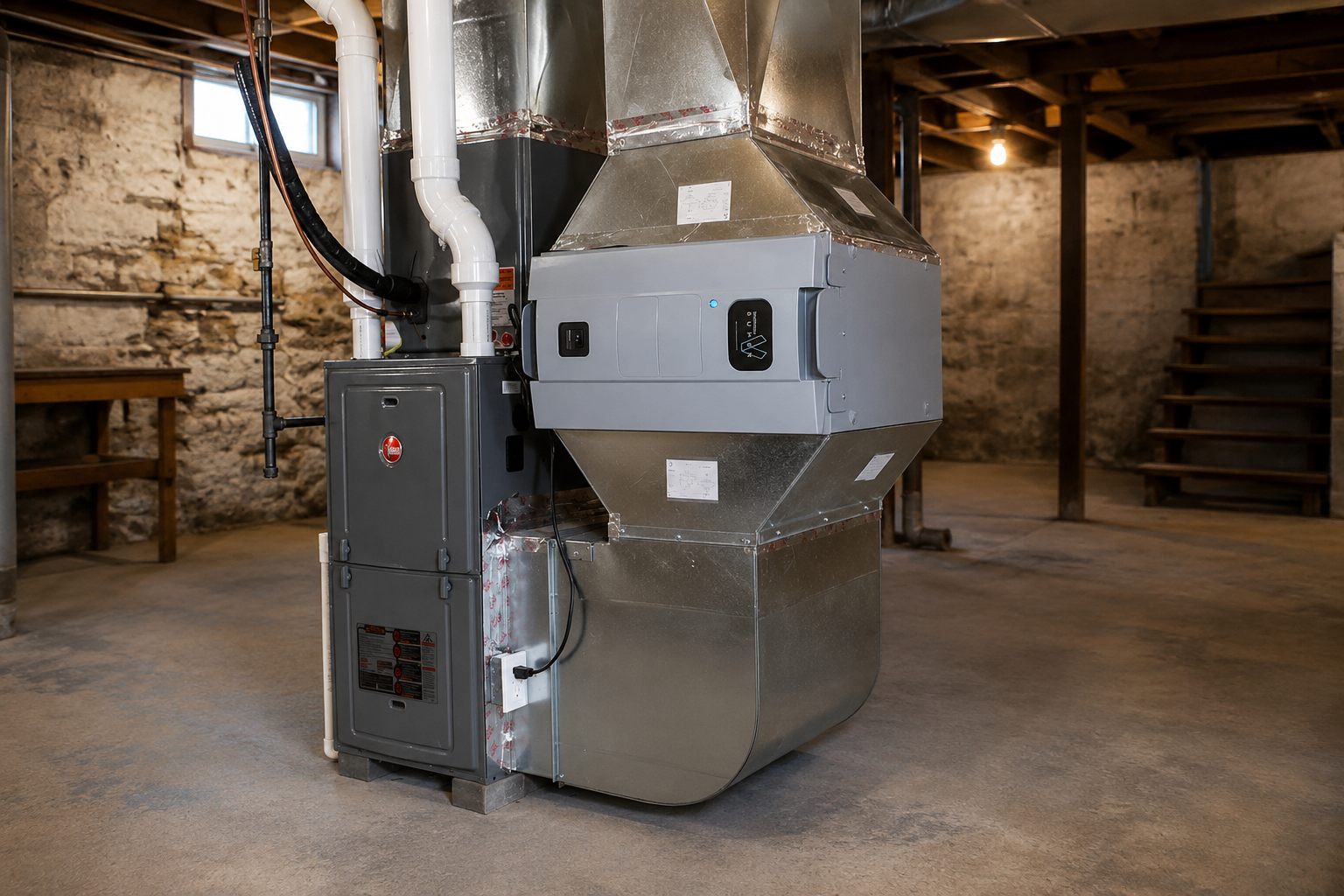
Whole-Home Humidifiers: No Buckets, No Refills, No Daily Maintenance
A whole-home humidifier mounts directly to your furnace or air handler and connects to your home's water supply. It runs automatically whenever your heating system runs, distributing moisture evenly through every room via your existing ductwork. There's nothing to refill, no buckets to empty, and no portable unit to lug from room to room. You set the target humidity level on the control, and the system maintains it.
Which Type of Whole-Home Humidifier Is Right for Your System?
Not every home or HVAC setup calls for the same unit. We assess your system, your home's square footage, and your typical humidity deficit before recommending a type.
Bypass Humidifiers
Bypass humidifiers work by diverting a portion of warm air from the supply plenum through a water panel, where it picks up moisture before returning to the air stream. They're the most common whole-home option, cost-effective, and reliable for most standard forced-air systems. They require a bypass duct connection between supply and return and work best in homes with higher-efficiency furnaces that run longer heating cycles.
Fan-Powered Humidifiers
Fan-powered units use a built-in fan to push air through the water panel rather than relying on furnace airflow. This makes them more effective in tighter homes or systems where bypass installation isn't practical, and they produce roughly 30% more humidity output than a comparable bypass unit. They also operate independently of the furnace blower, so they can humidify even when the furnace isn't actively heating.
Steam Humidifiers
Steam humidifiers generate humidity by heating water to steam and introducing it directly into the airstream. They're the most precise and highest-output option available — well-suited for larger homes, homes with significant air sealing, or households where someone has a medical need for tightly controlled indoor humidity. They work with any HVAC system, including heat pumps, and are not dependent on furnace heat to function.
Dehumidifiers for Lakeshore and High-Humidity Homes
If you're in Holland, along the Lake Michigan shoreline, or in any area where summer humidity is a persistent problem, the issue runs the other direction. Lake Michigan drives elevated summer humidity levels that can make a properly cooled home still feel heavy and damp. A whole-home dehumidifier integrates with your existing HVAC system the same way a humidifier does — it runs through your ductwork, pulls excess moisture from the air, and drains automatically. No portable unit. No emptying a reservoir twice a day. We install both humidification and dehumidification systems, and we know which one your home actually needs.
What to Expect When We Install Your System
We handle the full installation — unit selection, mounting, water line connection, duct work, and control integration. Most whole-home humidifier installations are completed in a single visit. We'll walk you through the target humidity settings before we leave and explain what seasonal adjustments to expect as temperatures drop in fall and rise in spring. If your existing HVAC system has any underlying issues that would affect humidity control performance, we'll tell you before we start — not after.
Frequently Asked Questions About Humidity Control in West Michigan
Why is my house so dry in winter even when the heat is running?
Forced-air furnaces heat air by passing it over a heat exchanger, which strips moisture from the air in the process. The longer your furnace runs — which in a Michigan winter is most of the day — the drier your indoor air becomes. Outdoor winter air is also naturally low in moisture, so there's little humidity entering the home through normal infiltration. Without a humidifier, most homes drop well below the comfortable 30–50% range by mid-winter.How is a whole-home humidifier different from a portable unit?
A whole-home unit connects directly to your water supply and distributes humidity through your existing ductwork to every room in the house simultaneously. A portable unit humidifies one room, requires daily or near-daily refilling, and does nothing for the rest of the house. Whole-home systems require no daily maintenance and maintain consistent humidity levels automatically.What humidity level should I set for my home in winter?
The target range is 30–50% relative humidity. In deep winter, you may need to dial it back slightly — closer to 30–35% — to prevent condensation from forming on windows in very cold temperatures. We'll help you dial in the right setting for your home's construction and your local climate during installation.Do I need a humidifier or a dehumidifier?
It depends on your location and the season. Most West Michigan homes need a humidifier for winter dry-air conditions. Homes near Holland and the Lake Michigan lakeshore often need dehumidification in summer, when lake-effect humidity keeps indoor air heavy even when the AC is keeping temperatures comfortable. Some homes benefit from both. A quick humidity reading with an inexpensive hygrometer will tell you where you stand.Does a whole-home humidifier work with a heat pump?
Yes, though the installation approach differs from a standard gas furnace setup. Steam humidifiers are generally the best fit for heat pump systems because they generate humidity independently rather than relying on high-temperature supply air. We'll assess your system and recommend the right unit during the estimate.
Serving West Michigan Homeowners Who Are Done Dealing With Bad Air
We install humidity control systems throughout West Michigan, including Kalamazoo, Grand Rapids, and Holland, and the surrounding communities. Whether you're dealing with a house that dries out every winter or a lakeshore property that stays muggy all summer, we'll tell you exactly what your home needs and install it right. Ryan has been in this trade since 2003, and this business was built on giving people straight answers — not upselling equipment they don't need.